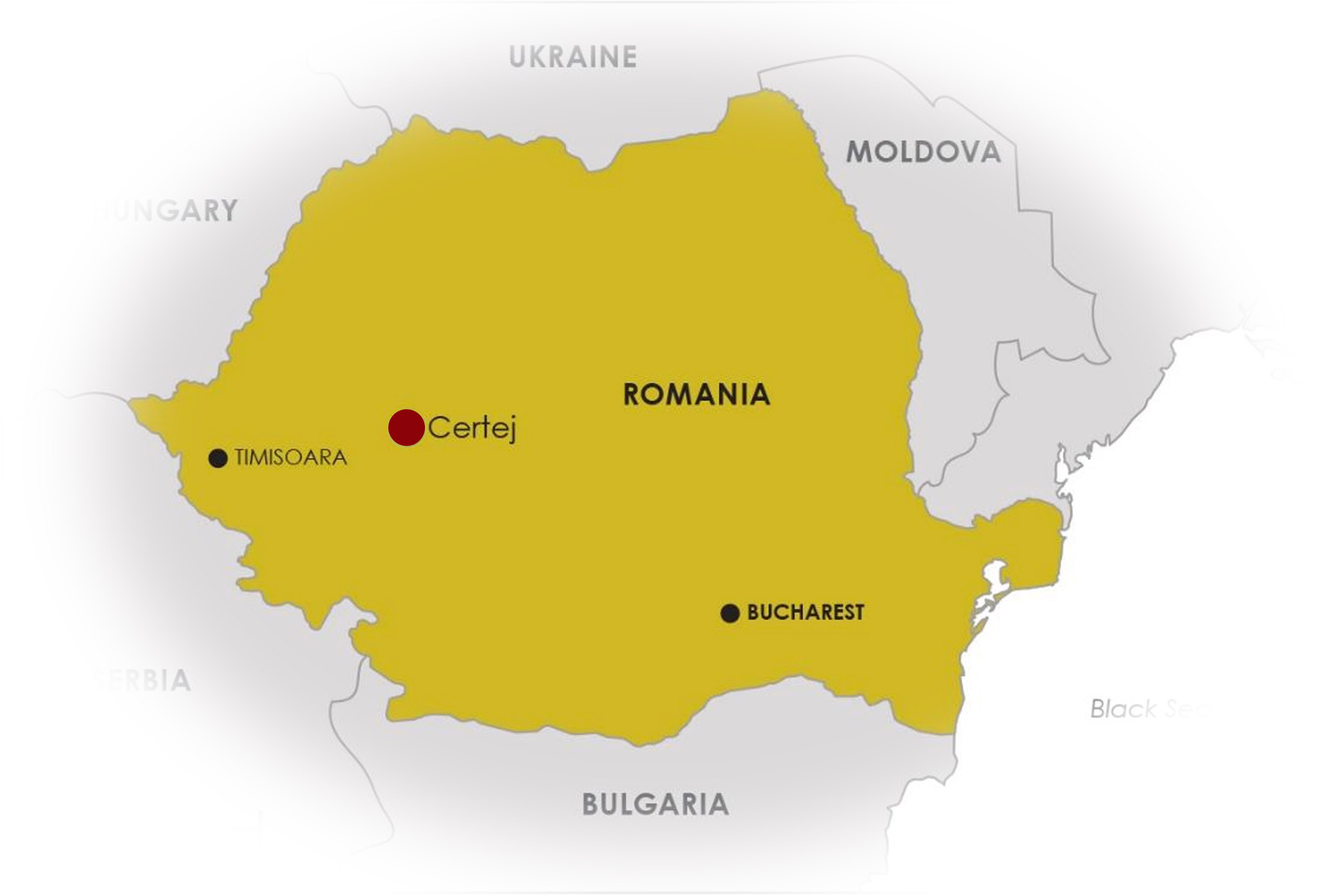
Past practices, which do not reflect today’s standards, led to significant human and environmental consequences. Wet tailings material from the Săcărâmb mine were incorrectly and inappropriately stored in the nearby Certeju de Sus village, resulting in the 1971 catastrophic dam failure. This tragedy resulted in the loss of 89 lives and had a lasting impact on the local community.
The historical Certej open pit mine, constructed in 1981, operated until its closure in 2006 as part of the Hunedoara mine closure programme. Historic operations were shaped by the standards and practices of their time, with less emphasis on environmental management than is expected today.
Following privatisation, more than $200M has been invested by previous shareholders to assess the mineral potential of the Certej project and advance its development.
The Certej project has since been redesigned to reflect input from local communities, non-governmental organizations, and other stakeholders. The new Certej project is designed in accordance with strict European Union standards for design, construction, operations and closure.
The project is cyanide free and incorporates best available technologies including dry stack tailings. The Certej project will utilize a “progressive reclamation” approach where areas no longer needed for mining operation will be restored to a natural state throughout the life of the project.